The Frustration Filter
Introduction
Being frustrated with another person isn't inherently a problem. It means you care. Something matters to you and it’s not going the way you want.
What you do with that frustration is another story.
Good leaders like you often bottle it up, until it seeps out sideways or bursts out unintentionally. The people you love and feel comfortable around are most likely to be on the receiving end of your irritability or snappiness, even if the real frustration is towards someone else. Suppression clearly doesn't work, then.
Being "authentic" or "vulnerable", by saying whatever's on your mind without thinking of the impact, isn't any better. You're smart, so you won't do that unless you're completely at the end of your tether and press the "f*ck it" button.
Before things get worse, here's a three step process to help move things forward without creating unnecessary drama.
What's different about this approach is that you're not going to focus on how the other person needs to change. You're going to pay attention on the skills you need to develop as soon as possible.
This doesn't mean you're not going to follow up with them. You really might need to do that, for everyone's sake. But you can't control them.
The only person you can really influence is yourself. As long as you're blaming your mental states on another person, you've given them a huge amount of power over your life. Take it back.
The Frustration Filter helps you move into clear, confident action in three steps:
Explode → Name the unfiltered version of the story that’s winding you up.
Explore → Shift your perspective to uncover what else might be going on.
Empower → Focus on the skill or action that’s actually within your control.
Make sure you move through all three stages. Skip one, and chances are you’ll stay resentful — or leap to being “the bigger person” without changing a thing.
Ready?
Grab a pen and let’s start.
🔴 EXPLODE
It's your time to Rage Write.
There’s a voice in your head giving a commentary on what’s going wrong and whose fault it is.
Write that down. Don’t try to sound reasonable or tidy it up. This is where we name the raw, unfiltered version of the story you’re telling yourself — before it starts making decisions for you.
You can use these sentence starters to help. Be honest about the intensity of your feelings.
"I'm feeling frustrated that [the person]......."
"I can't believe they would......"
"I'm fed up with...."
"I'm really f*cking angry that....."
Now choose of of these (usually rhetorical) questions to say out loud or in your head — with the tone you use when you’ve had enough:
“WHY are they like this?”
or
“WHY can’t they just....?”
List 3-5 judgemental explanations your brain is offering. It doesn’t matter how extreme. You’re not believing or acting on them — you’re simply getting them out of your system.
Things like:
They’re incompetent.
They don’t care.
They’re deliberately making things harder.
Now pause.
Pick one of those stories. Then ask:
“If I really believed that was true — how would I behave?”
Would you:
Be snappy all the time with them?
Stop trying?
Send a blunt message you’d probably rewrite three times?
And what would that be likely to lead to? Think that through and actually write it down.
You're not judging yourself. You're noticing how much power the unspoken story can have when it goes unchallenged.
🟠 EXPLORE
Now that you’ve named the unfiltered story, let’s broaden the perspective.
We're not excusing poor behaviour here, just breaking the spell of certainty.
Once you lock onto one version of the truth — they’re useless, they’re out to get me, they don’t care — your options shrink. You either dig your heels in or retreat completely.
Neither gets you very far.
So now I want you to ask the same question again, but this time with curiosity instead of criticism:
“Why else might they be acting like this?”
Give yourself a minute to come up with a few more generous — or at least more nuanced — explanations.
Maybe:
They’re overwhelmed and don’t want to admit it.
They’re under pressure from someone else.
They genuinely think things are ok.
They’ve never actually been told this matters.
You don’t have to know what’s true. You’re not trying to be nice. You’re trying to be effective.
Choose one explanation that feels plausible enough to work with. Then ask yourself:
“If that were the case, how would I approach this differently?”
Would you take a different tone? Check in before jumping to conclusions?
Then reflect on what the impact of this could be:
“If I did this, it's more likely to result in.....?”
This part of the process doesn’t mean you let things slide. It means you stop wasting time fighting a version of the story that might not even be accurate.
When you explore what else could be going on, you create more room to move. You’re no longer stuck in reaction mode — you’re working the problem.
Take a moment. What new angle just opened up?
Next, we’ll look at what this moment might be asking of you.
🟢 EMPOWER
Take them out of the picture for a moment.
Whatever the issue is — their behaviour, their silence, their attitude — put that to one side. This step isn’t about understanding them. It’s about looking at you.
Frustration often points to a skill gap — which is why this situation feels so hard to handle.
So ask yourself:
“What might I not know how to do yet?”
It could be:
“I don’t know how to raise this without sounding defensive.”
“I don’t know how to escalate this without fallout.”
“I don’t know how to ask for what I need — clearly, calmly, and early.”
“I don’t know how to set a boundary without over-explaining or apologising.”
Name it.
Now imagine that this was the real problem. Not them. Your own discomfort or lack of skill in handling the problem.
How would your behaviour change?
And what impact might that have?
Exactly.
This is the bit most people avoid, because it’s uncomfortable.
It’s also where your power is.
If the real issue is you don’t yet know how to do something, then it’s something you can learn. You can practise. You can get support — from a colleague, a coach, even a lawyer if it’s that kind of situation.
You’re no longer stuck. You’re developing.
So take a moment. Write down what you think this might really be about, from your side. What’s the skill you haven't mastered yet — and what’s the smallest step you could take to start building it?
You don’t need to do everything at once. But you do need to stop waiting for the other person to change before you act.
🔚 Wrap-up
Frustration isn’t the problem. Letting it run the show — or shoving it down until it bursts out unhelpfully — is the real issue.
The Frustration Filter gives you a way through it:
Explode — name the raw story, so it stops driving your decisions.
Explore — shift perspective and expand your options.
Empower — take back control by focusing on the skill, action or support you need next.
But let’s be clear — this doesn’t fix everything.
You still need the skills to raise real issues and navigate difficult conversations with care. A mindset shift is helpful, but it’s not enough on its own.
That’s why I work with clients on the actual next steps. We don’t just talk about dynamics — we write the email, we plan the meeting, we rehearse what to say when tension is high.
This exercise helps you get your head straight before all of that — because if you approach the situation feeling frustrated and polarised, that’s exactly how the communication will land too.
What Next?
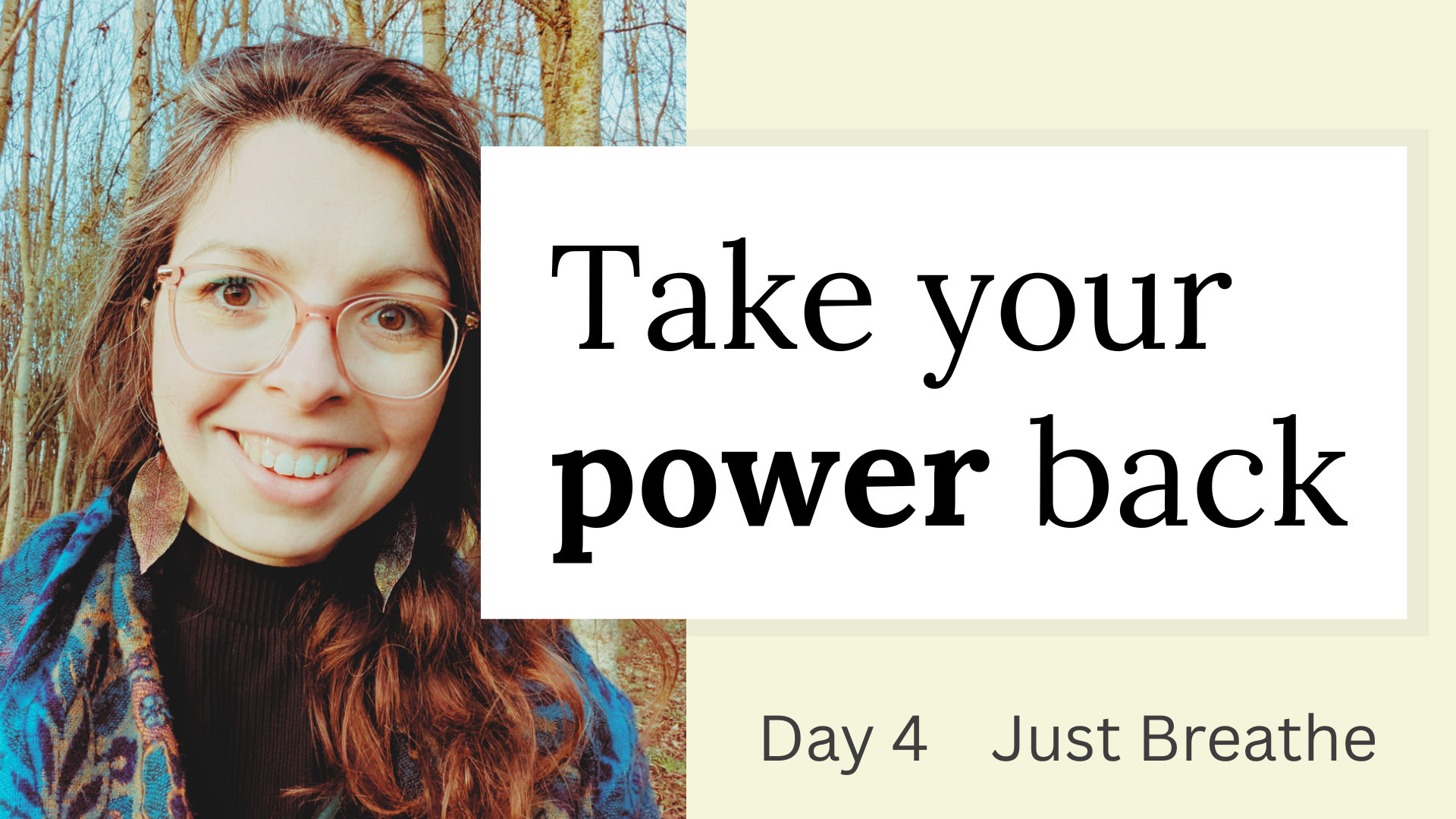
Other leaders like you are using my "Less Stress, More Impact - Just Breathe" series. 10 minute guided meditation and reflection practices. You don't need any experience of meditation, or have liked it if you do. 13 of the 30 are on YouTube.
Click the image below. Day 4 is on how to stay in control when frustrated.