How To Find Your Energy Again After Losing Someone You Love
Let's Be Honest
You've had a tough period.
The people around you are getting on with their lives, and you're getting on with yours — or at least going through the motions.
But something's off. You make yourself do things because you're meant to, rather than because you want to. Give yourself a free weekend and you'd probably veg out — then feel dissatisfied by Sunday evening. You want more but can't seem to feel motivated by new goals or dreams.
The voice in your head says you should be grateful. People in other countries have worse problems.
But no matter how much you push, or tell yourself to "get on with it", that flat feeling doesn't shift.
What No One Tells You
Somewhere along the line, you put your heart in a box. You had to. Keeping everything going was more important than stopping to feel.
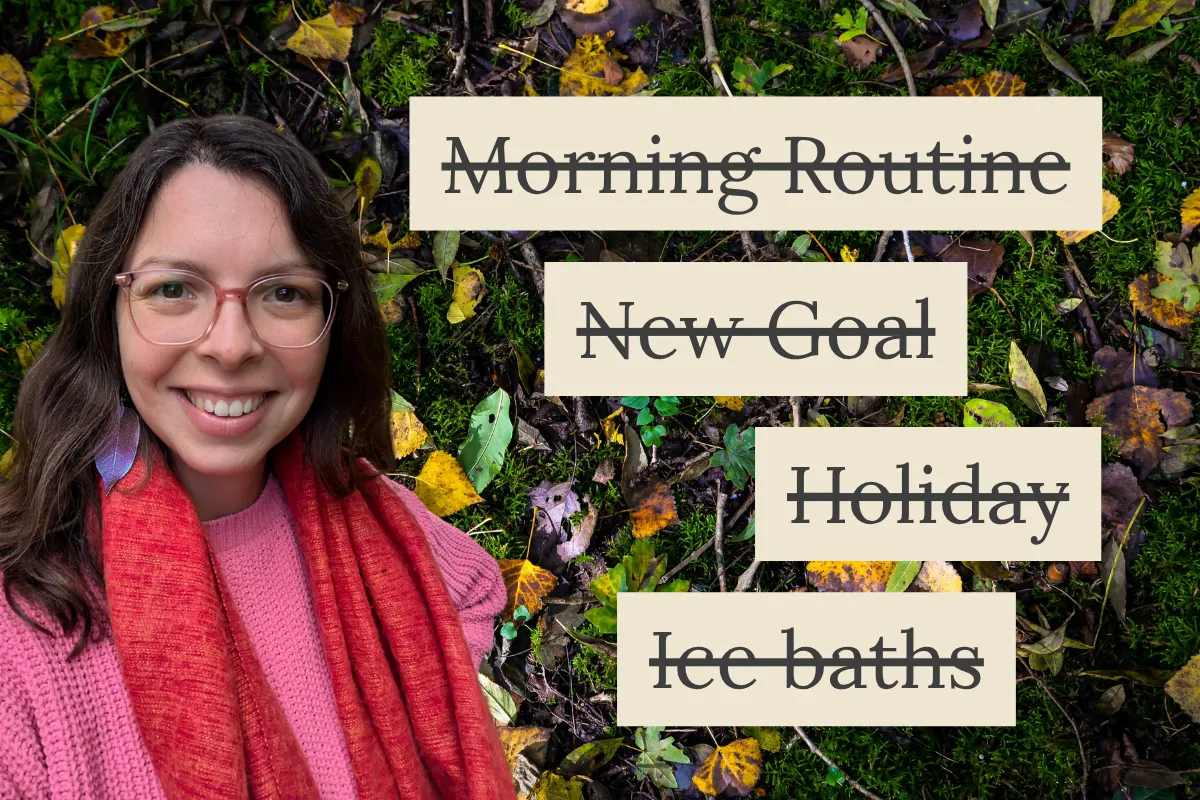
Trying harder won't fix this. Neither will a better morning routine, a holiday, or a new goal to chase.
You've been running away from what's dead — instead of turning toward it. That's what you need to face now, if you really want to find your energy, inspiration and direction again.
Every culture on earth, throughout all of human history, has created rituals for the dead — ways of marking loss, sitting with it, honouring it. There's a deep human understanding that loss or grief asks to be met, not managed.
Modern life tells us the opposite: move on, stay positive, keep it together, focus on what's ahead. You're sold a lot of things to keep your feelings at bay.
What that does is keep you stuck. When you suppress what's been lost — whether that's a person, a version of yourself, a relationship, or a dream — you don't move past it. You drag it with you, and it costs you energy you don't have, every single day.
The path forward is not around it. It's through it. When you stop running from loss and turn toward it, something unexpected happens. You start feeling alive again.
I've Walked This Path Before
My name is Aryanisha, and I'm a coach who works with ambitious leaders, experts and entrepreneurs. In August 2024, my Dad called to tell me he had cancer. I was in the Forest of Dean when he rang. Six months later, I led his funeral for 140 people.
He didn't make it.
In many ways, neither did I. When I lost him, I also lost my energy, my focus, my sense of what I was even doing any of this for. Part of me felt dead. Because part of me had died.
Thankfully, I had fifteen years of Buddhist practice to draw on: tools and perspectives that helped me look directly at death and loss, rather than pushing them away.
My time immersed in forest has given me so many methods and metaphors to work with too. After Dad's funeral In February last year, we spent most of Spring/Summer last year in the New Forest. We're back again. It's magic here. You can find that magic in an urban landscape as well, if you're seeking it.
I've spent 2026 turning all of this into a system that anyone can use — regardless of whether they've ever meditated, or have any interest in Buddhism at all.
That system is called Rituals For The Dead.
Before we move on to it's six stages, I want to introduce you to an important image.
The Forest And The Garden
People sometimes compare personal growth to gardening. I think forests are the better metaphor.
Tidy gardening treats mess and decay as problems to solve. When a plant dies or a weed appears, the gardener cuts it back, pulls it out, sprays it away. Order is restored. That's called beauty.
We treat difficult emotions much the same way — as if they're ugly, or a waste of time. Feelings linked to death, loss, and disappointment get pushed down. But pushing them away doesn't make them disappear. It just moves them. They go somewhere else in the system, and they still do harm — like weedkiller running off into a stream. You can't see it, but it has an effect.
A forest works differently. Nothing is wasted. Decay feeds new life. Leaves fall, break down, and return to the tree. The whole system moves in cycles of growth and death, and the death is part of what makes growth possible.
Your inner life works the same way. Emotions need time to be digested so they can feed who you're becoming and what you do next. When you feel flat or cut off, it's often because that process has stalled — not because something is wrong with you, but because you haven't had the conditions or the tools to let it move.
The problem isn't your emotions. It's not knowing how to work with them. Most steady, capable people hold their feelings back because they're afraid of getting stuck. But if you're basically well, you can go into what's there, learn from it, and come back out again. That's what this is built to help you do.
Forests don't resist their seasons. They don't try to stay in summer. There's something in that worth learning from.
Rituals For The Dead
The system itself follows six key stages. These loosely map onto the practical action taken when someone we love dies, but can be helpfully applied to all loss.
Welcome. Turn toward your experience with kindness. This is the foundation everything else rests on.
Name. Recognise what's been lost — even the things that feel too small or too silly to say out loud.
Dwell. Stop trying to fix it. Discover what becomes possible when you can simply wait.
Honour. Find the wisdom — and even the unexpected joy — in what you've lost.
Bury. Release the past without pretending it hasn't shaped you.
Grow. Use the clarity and energy emerging to fuel change in life, love or work.
This might sound heavy to some of you.
It's the opposite. The heaviness is what you're living with right now. This is how you put some of it down.
The Six Paths
The six steps tell you what you'll move through. The Six Paths are how you'll do it — six practices that make a huge difference when you're working with loss: ritual, reflection, nature, beauty, solitude, and relaxation.
I want to say a word about ritual, because it can put some people off before they've started. If it sounds spiritual or a bit earnest, I understand. But a wedding is a ritual. So is a funeral. So is blowing out the candles on a birthday cake and making a wish. Ritual is simply an action done with intention and meaning. That's all it is. You don't need to believe in anything, or be a particular kind of person. You just need to be willing to try something with a little care and curiosity.
The other five paths need the same attitude. None of this requires a retreat, a special location, or loads of time you don't have.
Try This Short Practice
Over the years, you’ll have undoubtedly lost things like:
People and pets you loved. Friendships. Professional relationships. Homes. Jobs. Precious objects. Your health.
Then there are the more subtle losses: Confidence. Certainty. Reputation. Hope. Playfulness. Trust. Dignity. Creativity. Integrity. Self-respect.
What else comes to mind? It might be a specific, significant event or a loss that’s accumulated from many moments over the years.
Choose one thing you’ve lost to work with here.
The most important criteria is that you’re confident engaging with it won’t have a detrimental impact on you or anyone else. We must all take personal responsibility for the effect this kind of Depth Work can have on our mental states and behaviour.
If bringing to mind a certain breakup, betrayal or bereavement, for example, will likely leave you feeling overwhelmed or reactive, choose something less charged. You might find it helpful to read through the instructions first, before making your decision.
Becoming a good ritualist is like becoming a good weightlifter: build up to the heavy stuff or you’ll damage yourself and others around you.
Whatever you’ve lost, there are some key principles we can borrow from funerals to mark this “death” - whether it’s a physical death or something else.
Today, we’ll focus on just one: beauty.
Isn’t it interesting that we buy the nicest coffin and flowers we can afford? If the ashes or body of a loved one is buried, we carefully pick a headstone and look after the grave for years to come. If we keep the ashes, they can be placed in a whole range of items with special designs. You can even have jewellery and keepsakes made. Whatever method, the loss is marked and observed over time through a physical space, made beautiful in the eyes of those left behind.
This is your invitation to create a beautiful space that acknowledges your own loss. Choose how ambitious you want to be in terms of size. Spaces as tiny as a locket and as large as a pyramid have been used by others.
Here’s a few suggestions:
A section of a wall or back of a door.
A whole or part of a shelf.
A box.
A space in your garden.
A gap between tree roots in local woodland.
It’s worth considering how private and undisturbed you’d like this to remain.
You may want to see it every day for a period of time, or you might wish to do your thing, then leave it behind.
Whatever you choose, make sure you can start acting on this impulse in the next couple of days. If you’re going outside your home, pick a day so this doesn’t become a nice idea you never act upon. The point is the practice. Don’t procrastinate over perfection.
Now, what do you want to place here?
You need two basic elements. The first should represent what you’ve lost. It could be directly linked, like a photo or object, or it could be more symbolic. The second should be something that will bring beauty to the area. You get to decide what’s beautiful. There are no external standards to consider.
Prepare the area with care and attention, before placing your items. You might like to pause for a few minutes before and after in silence, taking a few conscious breaths.
There’s no getting it right.
I want to encourage you to use your imagination, so I won't offer further ideas today. Giving it a go will build your confidence that this really is something natural.
If you get stuck, try asking yourself how a six-year old child might approach this.
Afterwards, spend 10-15 minutes writing about your experience.
What was easy?
What was hard?
Were there moments you enjoyed, even if the process brought up something painful?
What did you learn about yourself?
Does it leave you wanting to explore ritual further?
It’s normal to feel a mixture of emotions from a process like this.
It can be tempting to stay stuck in a low or irritable mood, if one has emerged. Be conscious of that and help yourself transition. I’m not suggesting you suppress your feelings but it's important to know that emotions arising from ritual are malleable. I like to shift my energy with something lighthearted and physical. I might go for a walk with my dog, make a snack listening to upbeat music, or do the weekly food shop. Yes, this worked even in the midst of grief about my Dad.
What's Next
Coming soon: what you need to know about yourself before using the Rituals For The Dead framework.
Most people approach the different stages or practices with either rose-tinted expectations or quiet resistance. Both get in the way. Knowing what you're bringing to the system changes everything.
P.S. I've built this into a six-month course, that's just £99. Want the details?